Last updated November 21, 2026
 Raised-panel steel
 Carriage house
 Modern flush
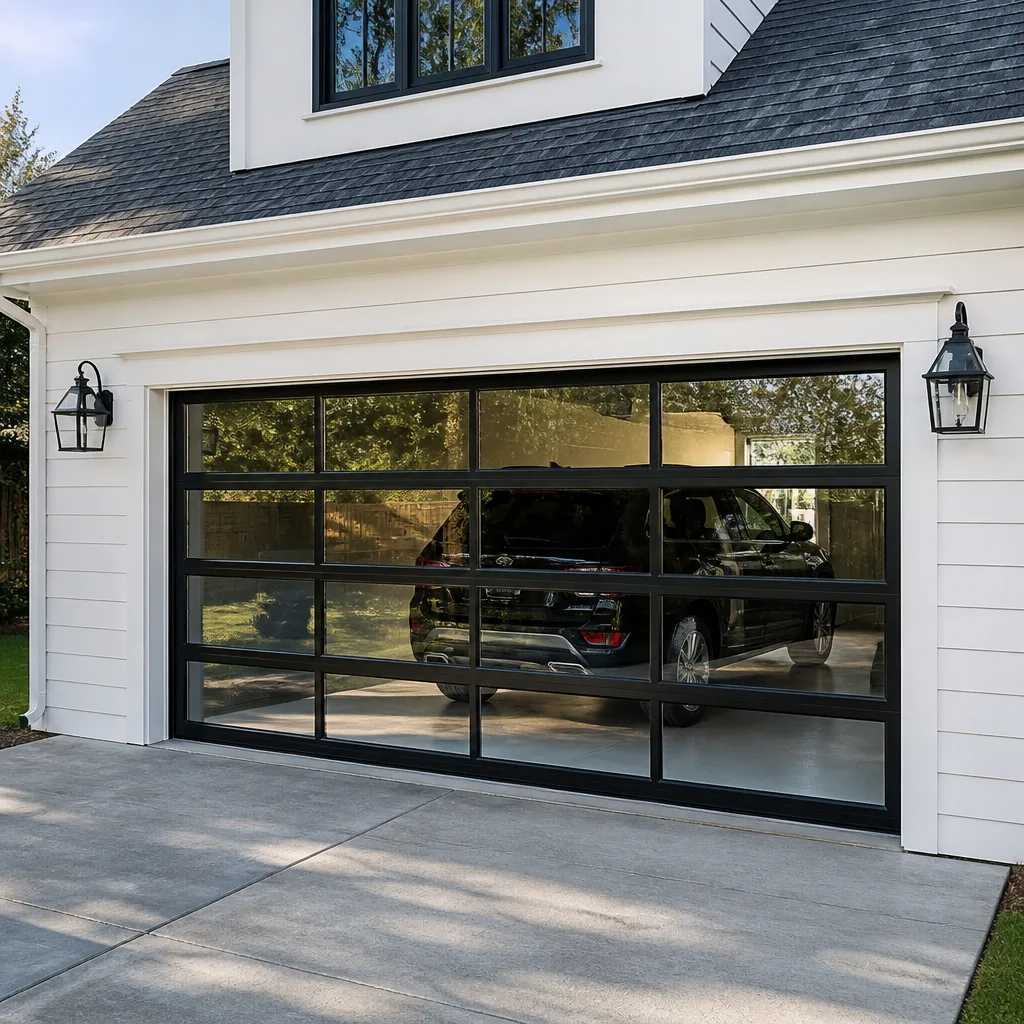 Full-view glass
 LiftMaster openers
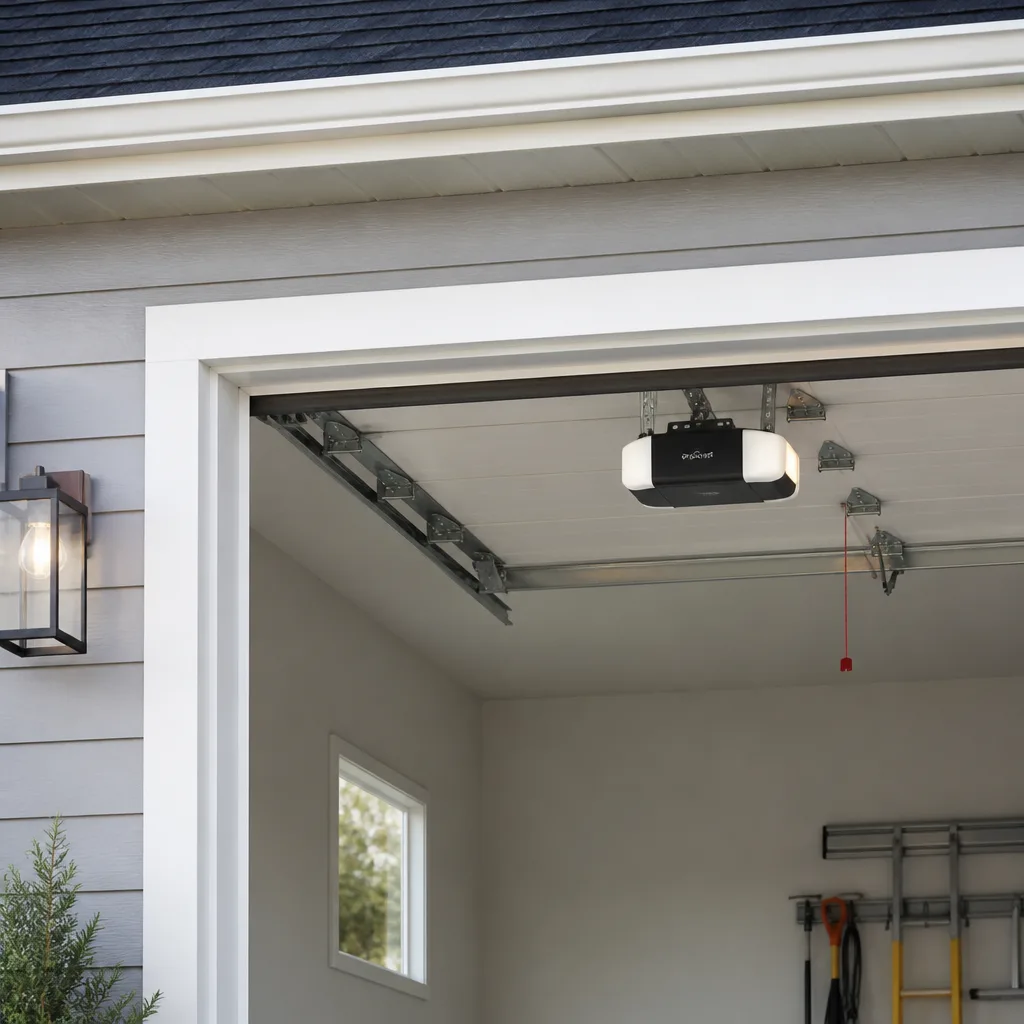 Chamberlain openers
Full 25-point door and opener safety check with every visit - springs, cables, rollers, tracks, and your LiftMaster or Chamberlain opener included
You get a price before we start. It does not change when the pro arrives.
Get your free estimateGarage Door Warning Signs: A Sheepshead Bay Homeowner’s Reference Guide
Most garage doors don’t fail out of nowhere. They give you weeks of notice – a small jerk on the way up, a scrape you only hear in the morning, a spring that looks a little off. The problem is that almost nobody knows what those signals mean until the door is stuck halfway and the car is trapped inside. A door that jerks slightly on the way up isn’t “just old.” It usually means a roller is seizing or a cable is fraying, and the homeowner who catches it early is looking at a modest repair while the one who waits is looking at a bent track and a much bigger bill. This Sheepshead Bay reference guide changes how you read your door: what each symptom tells you, how much runway you have, and which signs can’t wait for next week.
Quick Answer
A garage door that jerks, scrapes, groans, drifts back down after opening, or shows rust streaks and pooling water at the bottom seal is telling you a component is wearing out before it fails. Most warning signs give you days to weeks of notice, but a snapped cable, a door that comes off its track, or a spring that’s visibly broken needs same-day professional attention because the door can drop or the opener can tear itself apart. Learn the sounds, sights, smells, and feelings now, and you’ll never be surprised by a door that quits when you need it most.
Styles & brands we work with
- Raised-panel steel
- Carriage house
- Modern flush
- Full-view glass
- LiftMaster openers
- Chamberlain openers
Table of Contents
- Why We Organize Warning Signs by Sense, Not by Part
- What You Hear: Sounds That Mean Trouble
- What You See: Visual Warning Signs
- What You Smell and Feel: The Senses Homeowners Forget
- Time-to-Failure: How Much Runway You Actually Have
- Sheepshead Bay-Specific Warning Signs
- How to Describe a Warning Sign So You Get an Accurate Diagnosis
- Monitor for a Week vs. Call Today
Why We Organize Warning Signs by Sense, Not by Part
Every garage door troubleshooting article you’ll find sorts problems by component: springs, cables, rollers, tracks, openers. That’s how a technician thinks. It is not how a homeowner experiences a failing door. You don’t wake up noticing that your torsion cable is fatiguing. You wake up noticing that the door sounds wrong.
That’s why this guide is organized around your four senses. When you call for Garage Door Repair Sheepshead Bay, the first thing a good technician does is ask what you heard, saw, smelled, or felt. Those four words cover almost every failure mode a residential door has, and they’re the exact vocabulary that speeds up a diagnosis. If you can describe a symptom by sense, you’ve already done half the work.
Think about it for a moment. A grinding noise tells you metal is meeting metal where it shouldn’t. A burning smell tells you a motor is straining. A door that shudders as it rises tells you energy is going somewhere it shouldn’t. The part-by-part breakdown comes second; the sense-based symptom comes first. That’s the order this guide follows, and it’s the order that gets you from “something feels off” to “here’s what’s likely breaking” in under a minute.
Homeowners in Sheepshead Bay deal with a specific blend of conditions – humidity swings, older housing stock with doors that have been in service a long time, and doors that get used constantly as a main entry point rather than an afterthought. Those conditions shape which warning signs show up first and which ones escalate fastest. Keep that context in mind as you read on, because a symptom that’s a minor annoyance in a dry climate can be a genuine risk here.
What You Hear: Sounds That Mean Trouble
Sound is the earliest warning your door gives you. A healthy door is quiet – a low hum from the opener, a soft roll along the track, nothing more. Any new sound is information. Here’s how to translate the common ones.
- A sharp pop or bang, followed by the door not opening. That’s almost always a torsion spring breaking. It’s loud enough that people think something fell on the roof. Stop using the door immediately and call for spring repair.
- A grinding or scraping as the door moves. Metal on metal, usually a dry or seized roller, a misaligned track, or a worn hinge. It’s caught early, this is a modest fix. Left alone, it chews through the track and the roller assembly.
- A rhythmic squeak or squeal. Lubrication failure at the rollers or hinges. Squeals are the friendliest warning sign on this list – they buy you time, but they also mean friction is accelerating wear.
- A groaning or straining motor sound from the opener. The opener is working harder than it should. That could be a door that’s out of balance, a dragging roller, or a motor nearing the end of its service life. On LiftMaster and Chamberlain units, a struggling motor often shows up as a change in sound before it shows up as a failure.
- A rattle or clatter when the door is fully open or closing. Loose hinges, a slack chain on a chain-drive opener, or a door that’s vibrating because something’s out of alignment.
One distinction worth making: a sound that happens once and never returns is different from a sound that repeats every cycle. A single pop during an unusually cold morning could be harmless. The same pop every time the door moves is a component telling you it’s done. If you hear something new and it comes back on the next cycle, treat it as real.
What You See: Visual Warning Signs
Visual signs are the ones homeowners actually notice, and they’re also the easiest to misinterpret. “It’s just old” is the phrase that costs people the most. Here’s what your eyes should be checking for, and what each sign actually means.
- A visible gap in the spring above the door. Torsion springs break clean, and the result is a gap you can see from the floor. This is a same-day call. Never operate the door, and never try to lift it by hand.
- Frayed or kinked cables on the sides. Cables run under tension and wear at the drums. A stray wire or a kink is a cable on the verge of snapping, and a snapped cable lets the door drop or twist off its track.
- Rollers that look worn, cracked, or flat-spotted. Nylon rollers develop flat spots and steel rollers rust and grind. Either way, a bad roller is dragging the door and stressing the opener.
- A door that’s visibly crooked – one side higher than the other. That’s a balance problem or a cable problem, and it gets worse fast. Running the opener while the door is crooked can bend the panels or the track.
- Bent or separated track sections. A track that’s been hit or has drifted out of alignment will catch a roller, and once a door comes off a track, the repair gets serious.
- Rust streaks or bubbling paint. For a Sheepshead Bay door, this is one of the first things to watch. Moisture from humidity and drainage finds its way onto hinges, rollers, and the bottom rail, and rust is what makes the metal components seize.
One more visual check that’s worth building into your routine: look at the door from the side. If the gap between the door and the frame isn’t even top to bottom, the door isn’t sitting square, and a door that isn’t square is working against its own opener every time you use it.
What You Smell and Feel: The Senses Homeowners Forget
Smell and touch are the last two warnings you get, and they tend to be more urgent. A burning smell from your opener is a motor overheating or a wiring problem. It’s rarely a “keep an eye on it” situation.
What you smell:
- An electrical or burnt-plastic odor near the opener. Stop using the door and call. This is an overheating motor or a failing circuit, and it’s a safety issue that goes beyond the door itself.
- A hot rubber or hot metal smell after the door closes. Friction from a badly worn component or a door that’s out of balance. The door is fighting itself on every cycle.
- A damp, musty smell that won’t clear. In Sheepshead Bay, standing water and humidity are the usual suspects, and a musty garage usually means the bottom seal is letting moisture in. That moisture is what starts the rust cycle on the metal hardware.
What you feel:
- Vibration through the floor or wall when the door moves. Something is loose, unbalanced, or about to fail.
- The door feels heavy when you lift the emergency release. A properly balanced door should be manageable by hand. One that feels like it’s lifting an elephant is telling you the spring system isn’t carrying its weight. That’s an urgent sign, and please don’t try to “test” it repeatedly – handle the door with care and let a technician take it from here.
- Resistance or a catch you can feel when the door slides past a certain point. Usually a track or roller issue.
- Heat at the bottom of the door frame. If you can feel warmth on the frame or the bottom seal, an electrical component nearby is running hot.
Time-to-Failure: How Much Runway You Actually Have
This is the part most guides skip. Warning signs are useful only when you know which ones are talking about next week and which ones are talking about today. Here’s how the runway breaks down in our experience.
- Same-day – safety risk: a snapped cable, a door off its track, a visible spring gap, a burning smell, a door that drops partway under its own weight, or an unbalanced door that’s too heavy to lift. Stop using the door and call for an door repair visit.
- Within a few days: a grinding noise that’s gotten steadily louder, a crooked door, a track that’s bent, or a roller that’s clearly failing. These can become same-day emergencies at any moment on the next cycle.
- Monitor for a week: a new squeak, a rattle, an opener that sounds slightly tired but still works reliably, or a door that’s starting to drift back down after opening. All of these buy you time, but none of them fix themselves.
Here’s the honest summary: sound and sight give you the longest runway. Smell and feel give you the shortest. A squeak is a suggestion. A burning smell is a warning. A door that won’t lift by hand is an emergency. When the sign belongs to the bottom two categories – smell and feel – don’t schedule it for “sometime soon.” That’s today.
Sheepshead Bay-Specific Warning Signs
Some warning signs show up here sooner than they would in other places. It comes down to how the neighborhood’s houses sit relative to the water table, how humid the summers get, and the fact that many doors in Sheepshead Bay are on their second or third opener. A few things to watch that a generic garage door guide won’t tell you about.
- Water pooling at the bottom seal. Start your inspection outside. If the ground behind the door slopes toward the house or the driveway drains toward the sill, water finds the bottom seal and works in. That’s not a door problem on its own, but it’s why the door hardware corrodes faster here.
- Rust streaking at hinges and the bottom rail. The interior of a Sheepshead Bay garage spends a lot of the year at high humidity, and that’s enough to start rust on unprotected steel hinges and the bottom rail. Rust streaks are your signal to clean and lubricate before the hardware seizes.
- Opener hesitation in humid weather. Modern openers like a Genie or Chamberlain unit sense resistance to stop and reverse. Humidity-swollen wood, a sticky seal, and friction from a slightly rusty roller can all register as resistance, so the opener hesitates or reverses partway through a cycle. That hesitation isn’t the opener being “temperamental” – it’s a sign the door is harder to move than it should be.
- Stiff or stuck springs in the cold. A torsion system that’s carrying a door well in mild weather will strain in a cold snap. If the door gets sluggish in the coldest weeks and fine again in spring, the spring system is telling you it’s near the end of its life.
- The bottom seal curling and pulling away. If the rubber seal at the bottom of the door is peeling away from the frame, you’ve got an open door to moisture and pests. Replacing a bottom seal is a small job that prevents a much larger rust and track problem.
None of this is meant to alarm you. It’s meant to give you the local version of a warning sign. A rust streak in a dry climate might sit on a door for years without consequence. In Sheepshead Bay, it’s the start of a cycle, and it’s worth treating the first time you notice it.
How to Describe a Warning Sign So You Get an Accurate Diagnosis
A technician who can form a rough diagnosis over the phone arrives with the right parts and the right tools. A vague description (“it’s making a noise”) means a second visit and more downtime. Here’s how to describe what’s going on in a way that actually helps.
- Name the sense first. “I’m hearing…” or “I’m seeing…” or “I felt…” That single word points to the right category immediately.
- Describe when it happens. On the way up, on the way down, only at the top, only at the bottom, or only when it’s cold or humid. Timing narrows the diagnosis fast.
- Give the door’s age bracket, not a precise year. “It’s older” or “it’s a newer install” is enough – we’re not performing a telephone inspection.
- Mention the opener brand if you know it. LiftMaster, Chamberlain, Genie, or Craftsman units report problems differently, and it helps to know where to look first.
- Say what you haven’t tried, too. If you’ve already pulled the release cord, tell us. That changes the door’s state and the safety measures on the visit.
One note: please don’t test a warning sign by cycling the door repeatedly to “make sure it’s still broken.” Every cycle on a failing spring or cable is one more chance for the component to let go completely. If the door is stuck and you need to get the car out, use the emergency release with care, and don’t force anything.
Monitor for a Week vs. Call Today
Two lists, and they should be easy to memorize. The first list is the one you can live with for a few days. The second list is the one that becomes a security or safety risk if you wait.
Safe to monitor for a week:
- A new squeak or squeal on the cycle
- A rattle or clatter at the top of the cycle
- An opener that sounds slightly louder than it used to but works every time
- A door that drifts back down after opening (still a fix – just not necessarily today’s fix)
- A bottom seal that’s starting to curl
- Rust streaks you’re planning to clean and lubricate
Not safe to wait – call the same day:
- Any visible gap in the torsion spring, or a door that won’t open at all after a pop
- A frayed or kinked cable
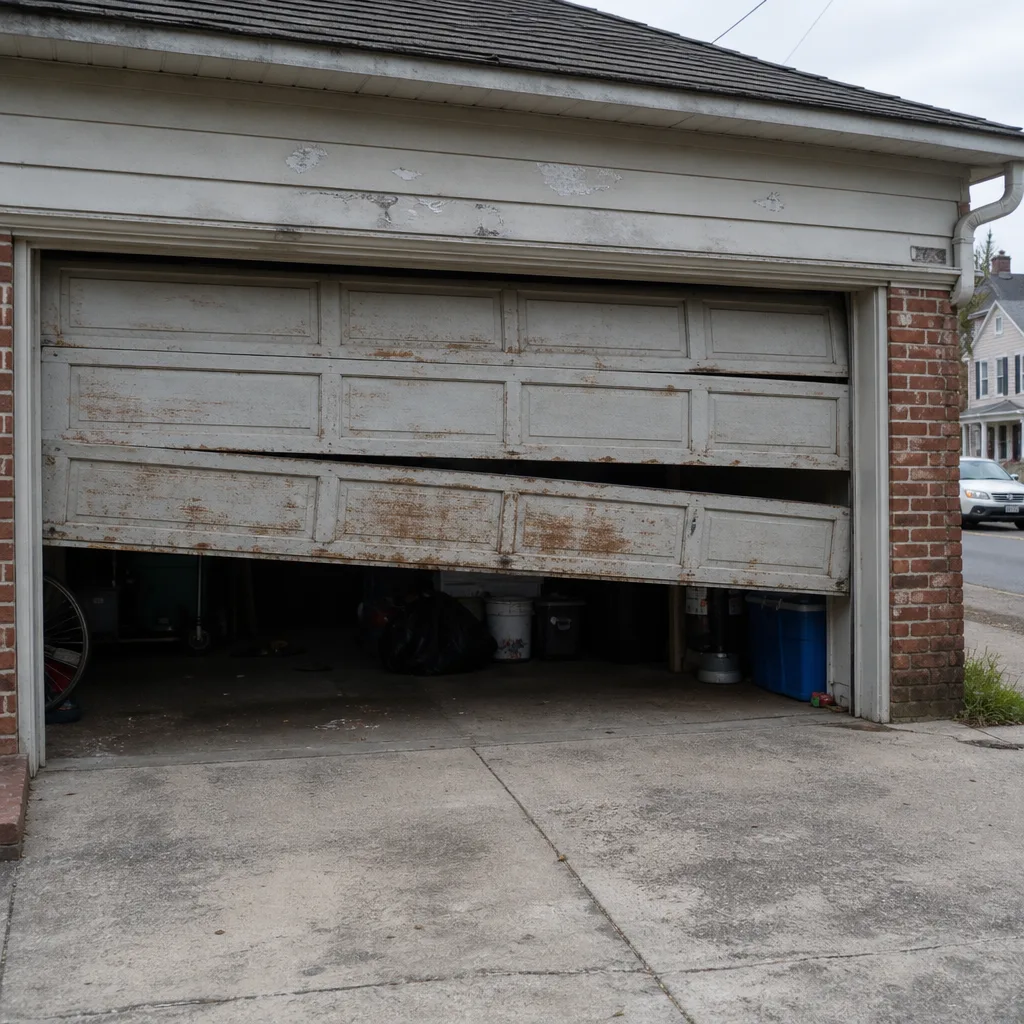
- A door that’s crooked, off its track, or that has dropped partway
- A burning smell or an overheated opener
- A door too heavy to lift by hand after releasing the opener
- A door that won’t close, leaving your home open
We treat emergency calls seriously because a door stuck open isn’t a scheduling inconvenience. It’s your home with the biggest entry open to the street, and it needs the same attention as anything else that compromises your security. Emergency availability is a real service here, not a vague promise. It also matters for opener repair when the opener is the thing that’s failed and the door is left in whatever position the failure left it.
Common Mistakes to Avoid
- Chalking up a jerk or a scrape to “it’s just old.” A jerky cycle is a worn roller, a frayed cable, or a failing spring. Age is a reason, not a symptom, and treating it that way is the difference between a small repair and a bigger one.
- Cycling the door to see if the noise “goes away.” Every cycle on a worn spring or cable is one more chance for it to break. If the noise is new, use the door as little as possible until a technician takes a look.
- Lubricating a spring or a cable to fix a noise. Please don’t. Spring and cable systems are under tension and aren’t a homeowner lubrication job. If the noise is coming from the springs, that’s a technician’s call.
- Ignoring a burning smell because the door still works. A motor that’s running hot is a fire risk, and “it still works” doesn’t change that. Stop and call.
- Assuming a door that drifts down after opening is “just a quirk.” That’s the opener’s limit setting or a balance problem, and it means the door is harder to move than the opener expects. It also means the next symptom could be a failure.
- Ignoring the bottom seal because the door opens fine. In Sheepshead Bay, a failed bottom seal is a moisture problem first and a door problem second. Replacing it early is one of the cheapest preventive things you can do.
- Not knowing the opener brand. When you call, “I think it’s a LiftMaster or a Chamberlain” helps more than “the white box on the ceiling.” Knowing the brand means the right parts and a single visit.
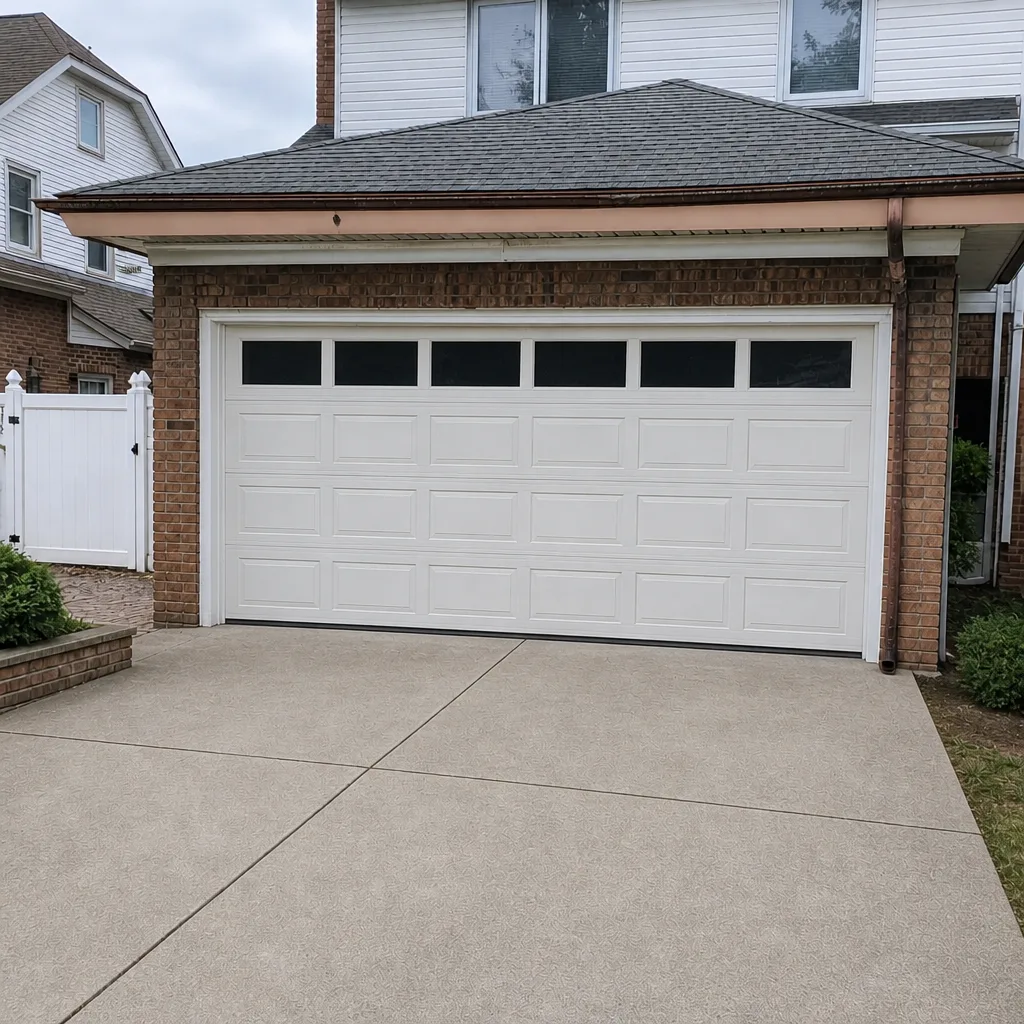
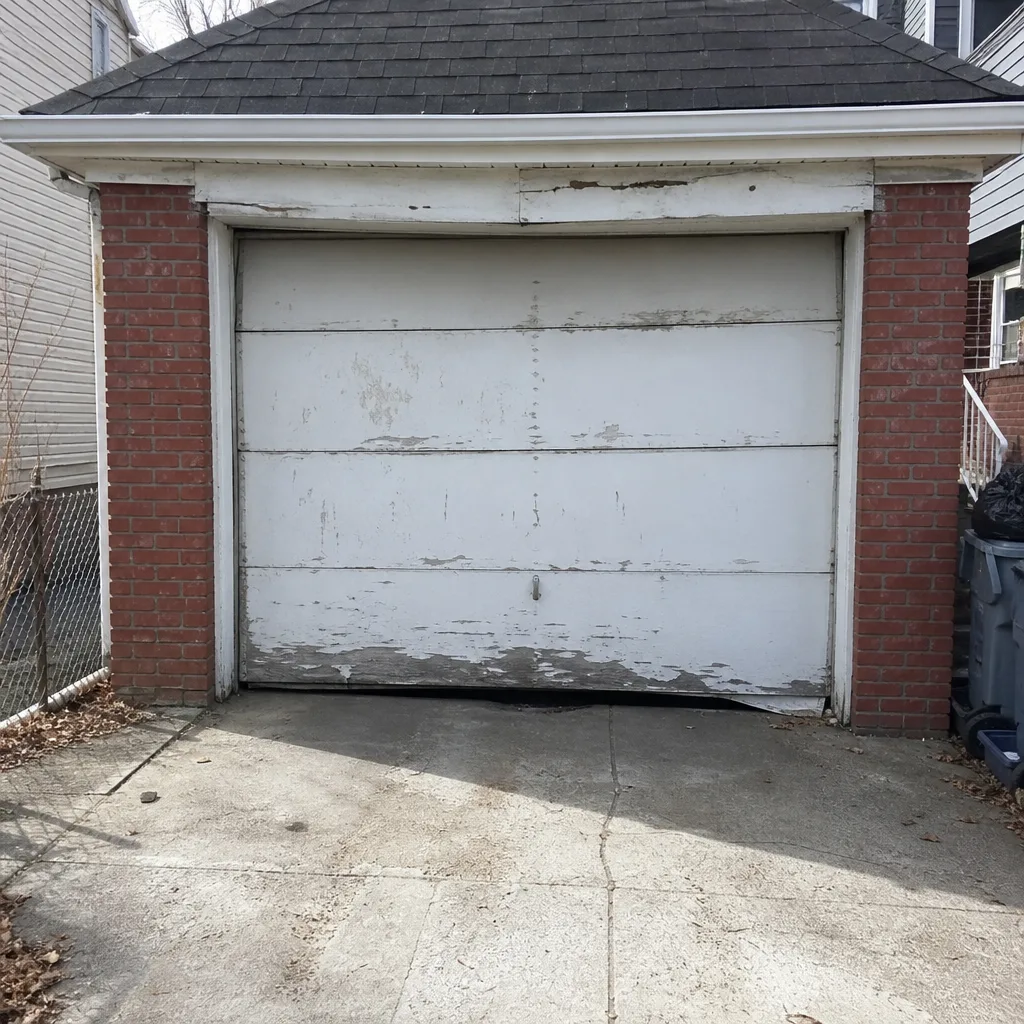
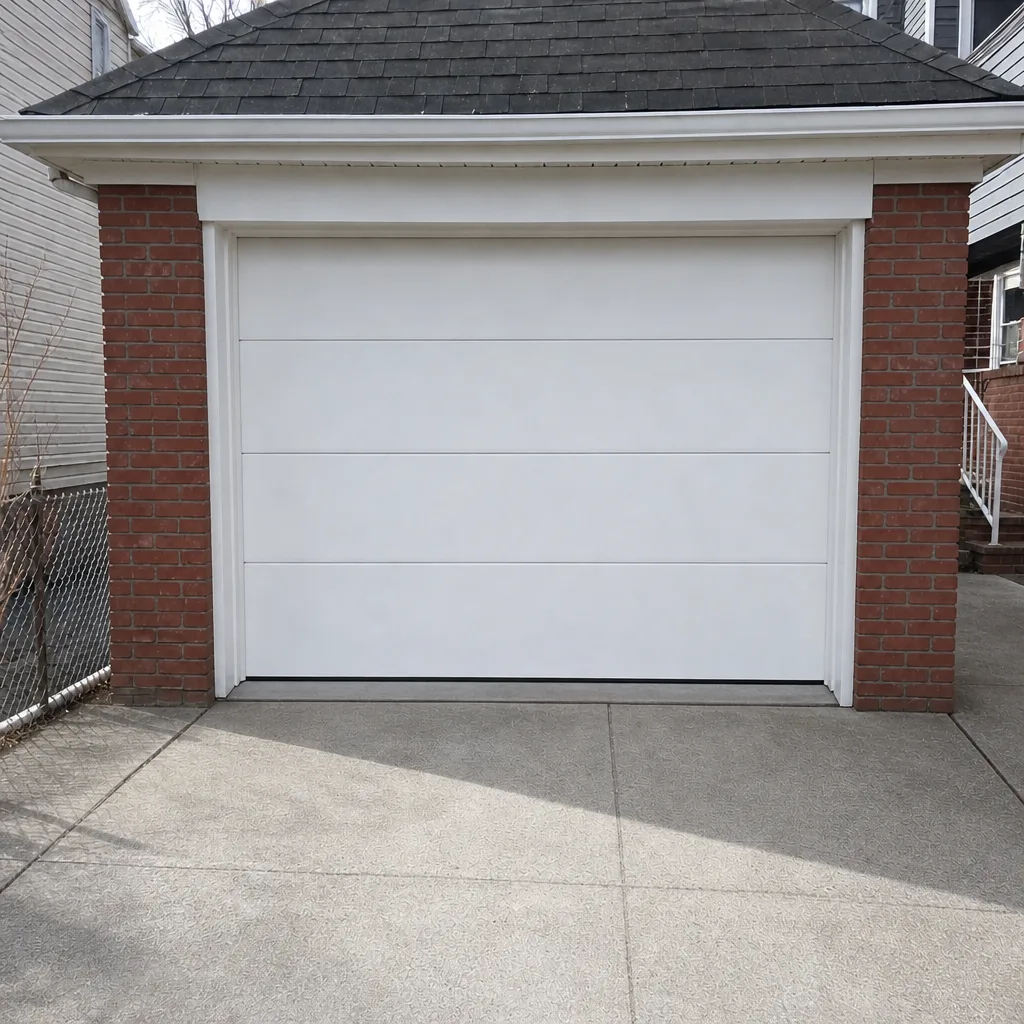
See the difference
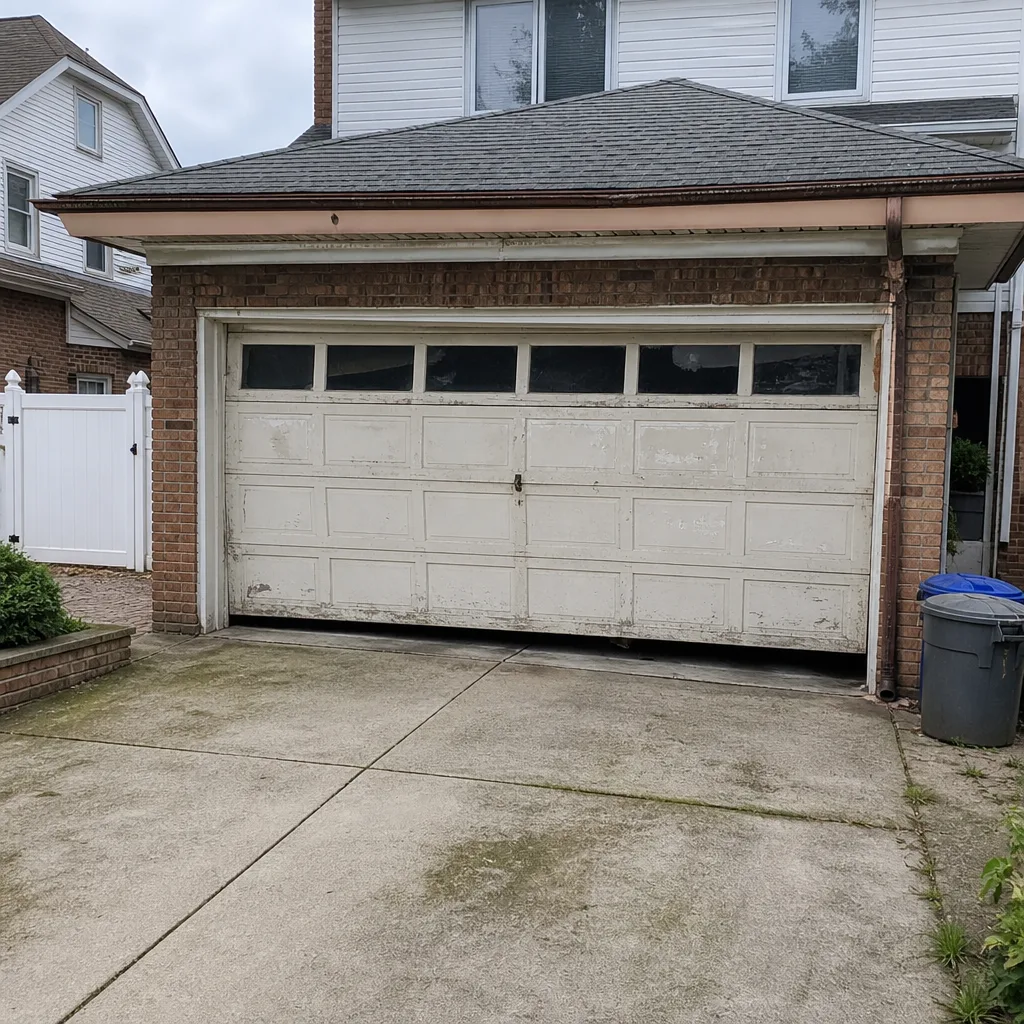 Before
 After
 Before
 After
 Before
 After
When to Call a Professional
Call a professional when the warning sign is on the “not safe to wait” list, when you can’t safely get the car out, or when the door’s behavior has changed and you don’t know why. That covers a snapped spring, a stuck door, a door that won’t close, a burnt smell at the opener, and any door that’s gone crooked or come off its track. It also covers the everyday cases: a new noise you can’t place, an opener that works but sounds tired, or a door you’re planning to replace and want an honest assessment on. Garage Door Repair Sheepshead Bay offers free estimates in Sheepshead Bay – call (833) 954-3381. Our technicians have up to 13 years of experience, and we work on your brand, so a failing Clopay door and a tired LiftMaster opener are one call.
Frequently Asked Questions
The most common warning signs are a new grinding or squeaking noise on the cycle, a door that jerks or shudders on the way up, a visible gap in the torsion spring, frayed cables, a crooked door, and an opener that hesitates, reverses, or drifts. Any of these means a component is wearing out before it fails, and the earlier you catch it, the smaller the repair. Call (833) 954-3381 for a free estimate if any of them have shown up in Sheepshead Bay.
It depends on the door, the hardware, and how often it cycles, but most major repairs come from worn springs, cables, and rollers rather than from the door itself. A door that’s inspected and kept lubricated gets a longer service life from the same parts, while one that’s ignored wears faster. Watch the warning signs in this guide and you’ll usually see the major repair coming rather than be surprised by it.
No, and please don’t. Garage door springs are under extreme tension, and a mistake with a torsion or extension spring can cause serious injury – this is the repair most likely to send people to the hospital, and no tutorial substitutes for the right tools and the spring-load training a technician has. Call a professional. Garage Door Repair Sheepshead Bay handles spring repair as a core service; call (833) 954-3381 for a free estimate.
If the door still opens but the sound, feel, or speed has changed, a component is talking to you and it will eventually stop doing so silently. A new squeak or a slight hesitation is safe to monitor for a week. A grinding sound, a crooked door, or a door that’s too heavy to lift by hand is a same-day call. When in doubt, call (833) 954-3381 and describe what you notice – we’ll tell you whether it’s urgent.
None of the warning signs in this guide are truly safe to ignore, but some do give you time. A new squeak, a rattle, or a slight hesitation in humid weather is safe to watch for a week or so while you schedule a repair. Rust streaks and a curling bottom seal are also safe to plan around – but they’re the signs to fix before the next wet stretch makes them worse.
A burning smell means the opener is overheating or there’s a wiring problem, and it’s a same-day call. Stop using the door until a technician looks at it, and don’t open the opener housing yourself – the components inside hold a residual charge. Call (833) 954-3381 and describe the smell and when it happens. Estimates are free and the price is agreed before any work starts.
The Bottom Line
Your door has been telling you something for weeks, and now you have the vocabulary to hear it. The main takeaways: sound and sight give you the longest time to act, and smell and feel are the signs to treat as today’s problem. A snapped spring, frayed cable, crooked door, or burning smell is never a “wait and see.” A squeak, a rattle, or a bottom seal starting to curl is a chance to plan ahead. In Sheepshead Bay, add rust streaks, pooling water, and humid-weather opener hesitation to your regular inspection. Catch the symptom now and the repair stays small.
Whatever you’ve noticed – a noise, a jolt, a smell, a door that just isn’t acting like itself – call Garage Door Repair Sheepshead Bay at (833) 954-3381 for a free estimate. We service LiftMaster, Chamberlain, Genie, Clopay, Amarr, Wayne Dalton, Craftsman, and Raynor equipment, so there’s no “we don’t work on that brand” phone call waiting for you. Tell us what you hear, see, smell, or feel, and we’ll tell you what’s likely going on and what it costs. The price is quoted and agreed before any work starts, every time.
Written by the team at Garage Door Repair Sheepshead Bay.