Last updated November 21, 2026
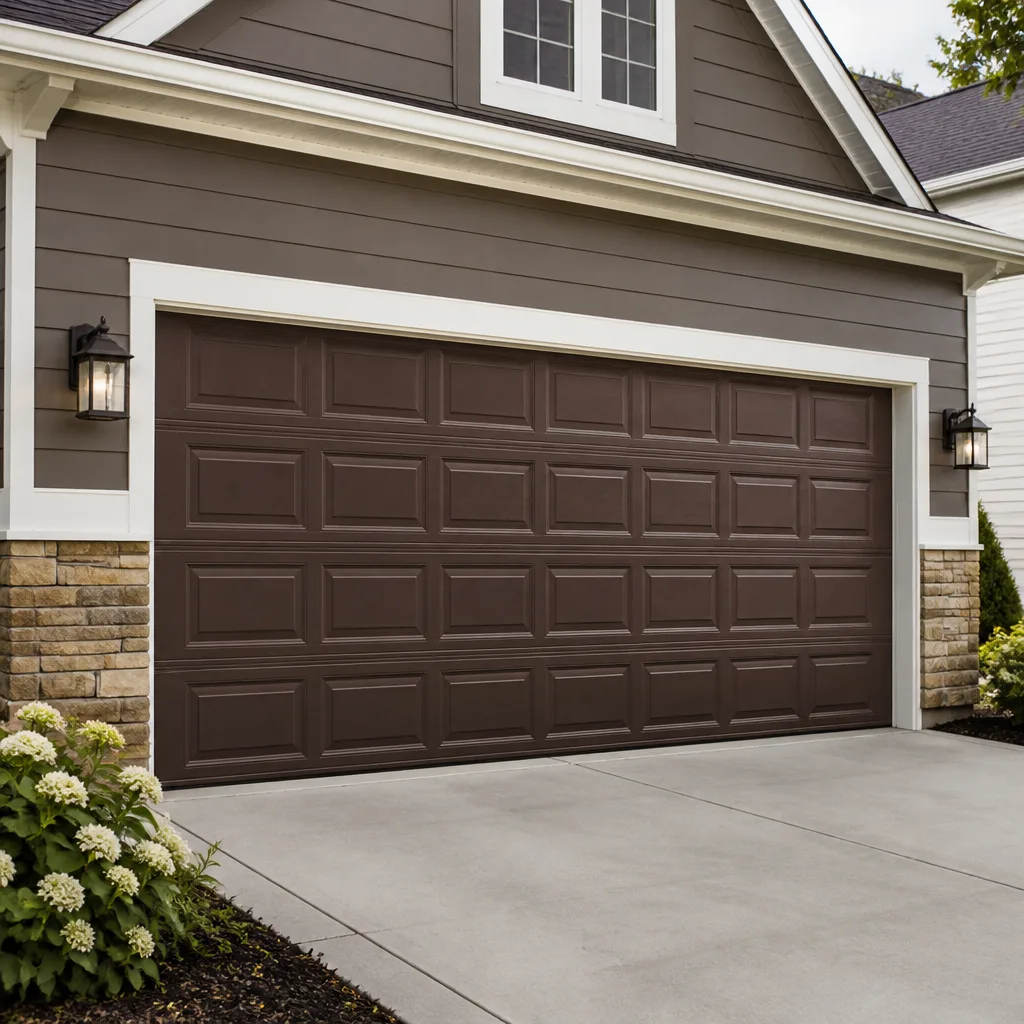 Raised-panel steel
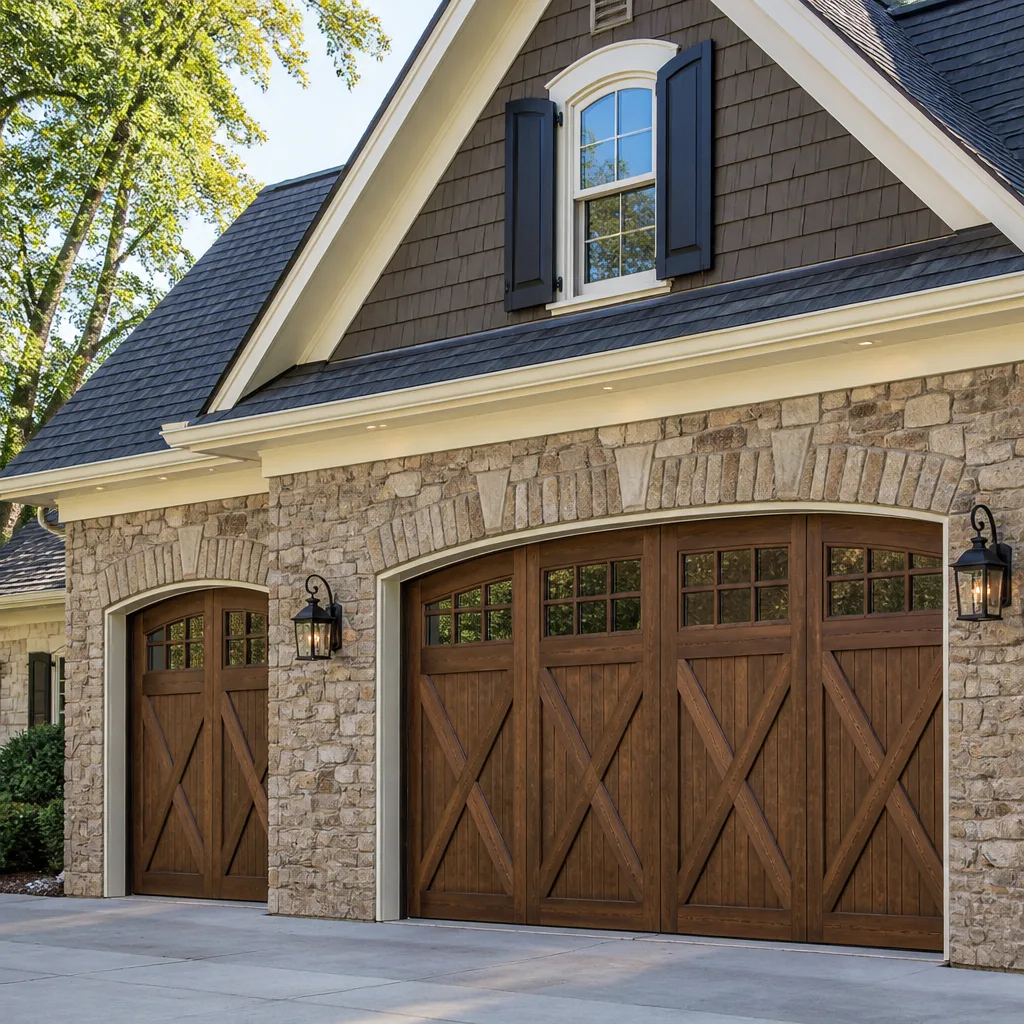 Carriage house
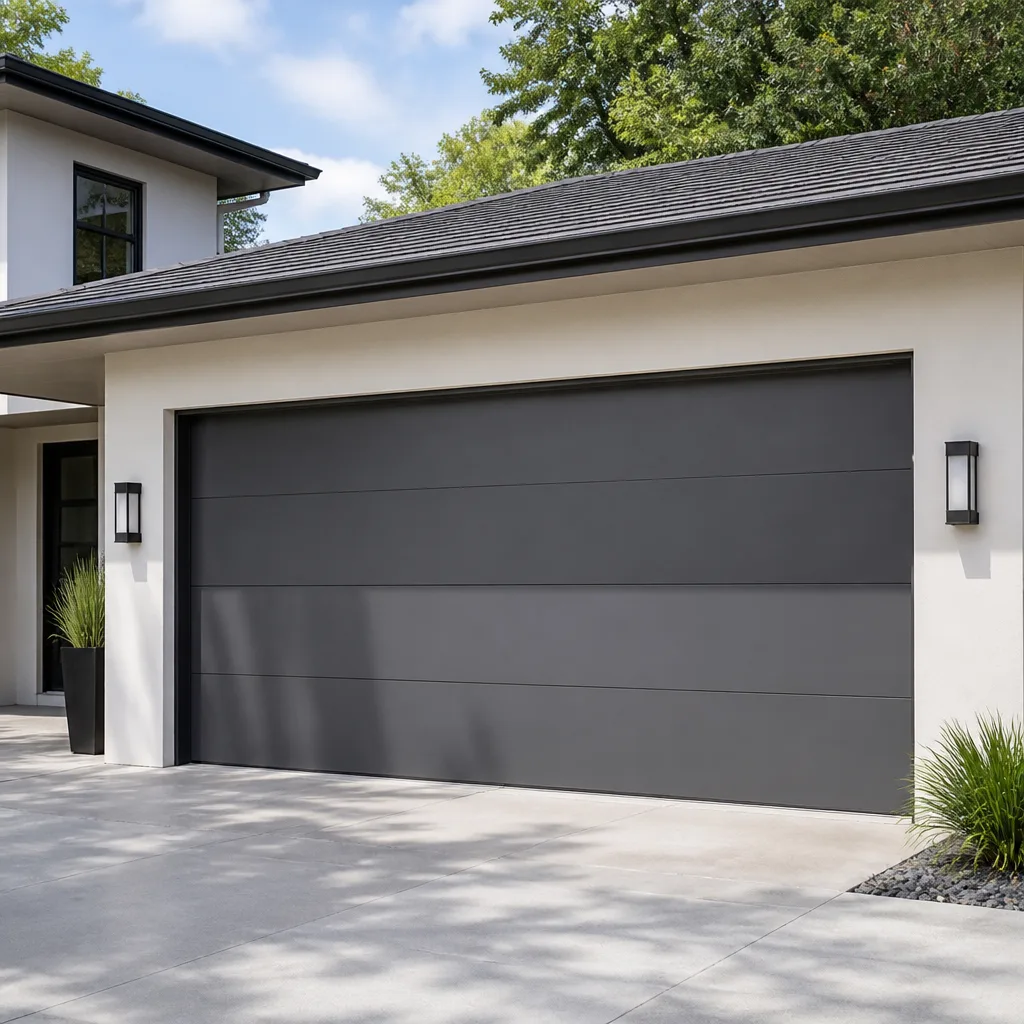 Modern flush
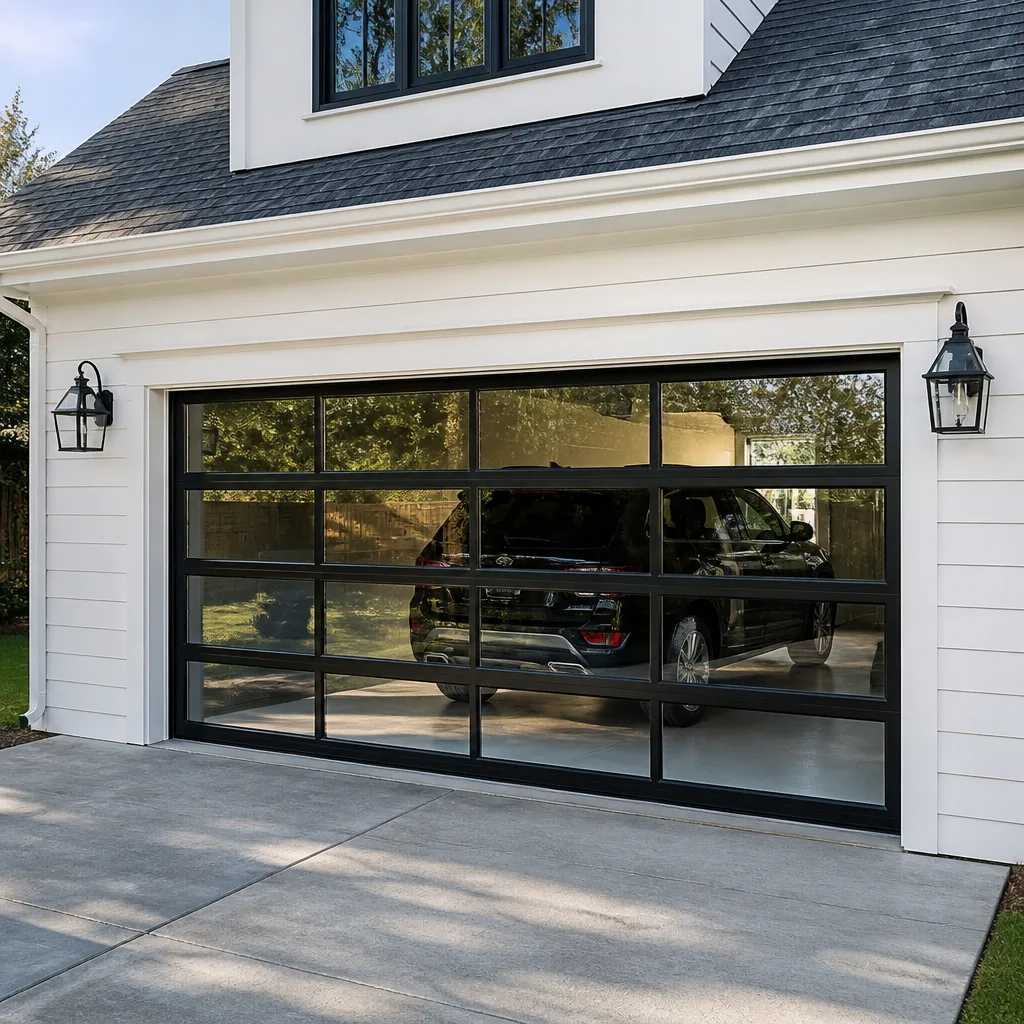 Full-view glass
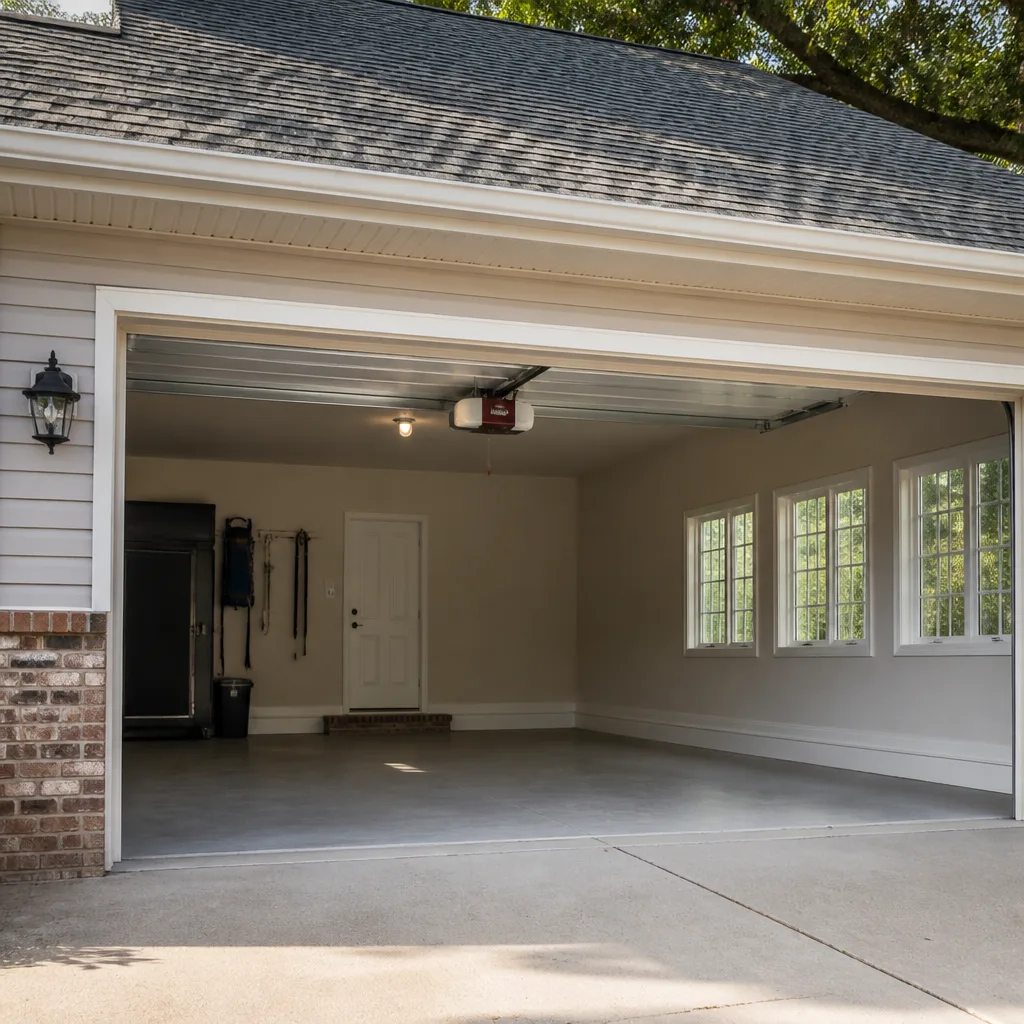 LiftMaster openers
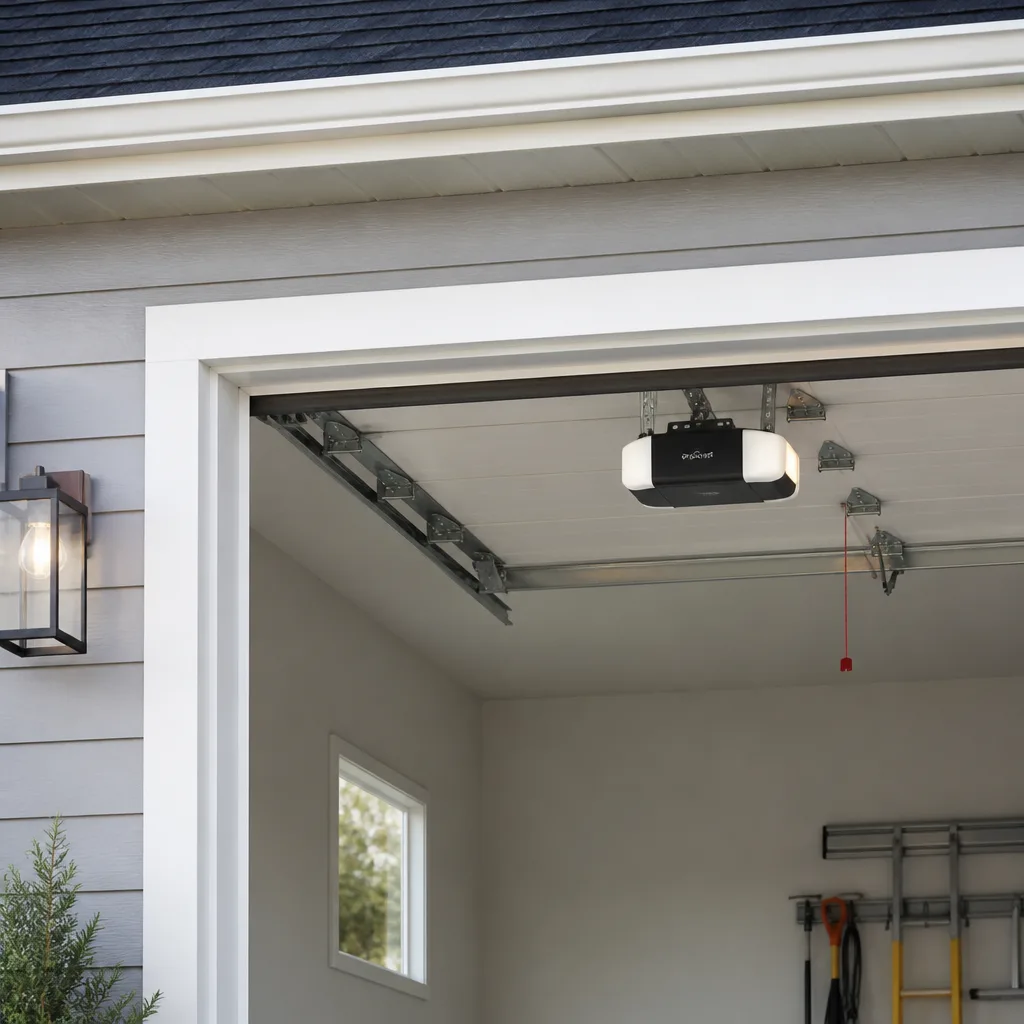 Chamberlain openers
Full 25-point door and opener safety check with every visit - springs, cables, rollers, tracks, and your LiftMaster or Chamberlain opener included
You get a price before we start. It does not change when the pro arrives.
Get your free estimateGarage Door Emergency Preparedness Guide for Sheepshead Bay Homes
Most garage door advice focuses on the moment something breaks. That’s the wrong place to start. The Sheepshead Bay homeowner who comes through a coastal storm without a problem isn’t luckier than their neighbor; they’ve usually done a short round of prep on a dry, ordinary afternoon, long before the sky turns. A door that has been exercised by hand, whose manual release has been tested, and whose threshold has been sealed behaves very differently when the power drops and the wind picks up. This guide walks through that prep, the safe way to run a door without power, what to do when it’s stuck open and help is hours away, how to document storm damage, and the five things to inspect within 48 hours of a storm passing. Read it once now, and the decision tree will already be in your head when you actually need it.
Quick Answer
Preparing your garage door for a Sheepshead Bay storm means testing the manual release before you need it, knowing how to disengage the opener and lift the door by hand, sealing the threshold against wind-driven water, and photographing the door’s interior and hardware on a calm day so you have a “before” record. If a door is stuck open with a storm approaching, the priority is getting it closed and secured until a technician can reach it – not forcing a repair yourself. Spring, cable and opener work is trained-professional territory, and the safest call you can make in an emergency is (833) 954-3381.
Styles & brands we work with
- Raised-panel steel
- Carriage house
- Modern flush
- Full-view glass
- LiftMaster openers
- Chamberlain openers
Table of Contents
- Pre-Storm Garage Door Checklist for Sheepshead Bay
- How to Operate Your Garage Door Safely During a Power Outage
- What to Do If Your Door Is Stuck Open and a Storm Is Coming
- How to Document Storm Damage for Your Insurance Claim
- The Five Components to Inspect Within 48 Hours After a Storm
- Neighborhood Notes: How Sheepshead Bay Homes Differ
- When to Call a Professional
- Frequently Asked Questions
Pre-Storm Garage Door Checklist for Sheepshead Bay
Every Sheepshead Bay storm season follows the same rough shape: a forecast that firms up over a day or two, a scramble at the hardware store, and then hours where nothing can be done because the wind is too strong to be outside working on a door. The prep below belongs on the calmer side of that window. None of it requires special tools, and most of it takes an afternoon to complete the first time and minutes to repeat each season.
Here’s what to run through:
- Test the manual release. With the door fully closed, pull the red release cord (or handle) on the opener trolley. The door should detach cleanly. Lift it about a foot by hand, lower it, then re-engage the trolley. If the door fights you or the trolley won’t re-latch, that’s a repair to sort out now, not mid-storm.
- Check the balance. Disconnect the opener, lift the door halfway, and let go. A balanced door stays roughly where you left it. A door that drops on its own means a spring is tired and the door is heavy – get it looked at before the season peaks.
- Clear the tracks and the floor. Debris in the track, or a leaf pile at the threshold, is what jams a door at the worst moment. Sweep the threshold and wipe out the vertical tracks.
- Look at the weather seal. The bottom rubber and side seals keep wind-driven rain out of the garage. If the bottom seal is cracked or flat, it won’t sit tight against a wet, debris-strewn floor.
- Photograph everything. Interior, exterior, springs, tracks, opener head, and the wall label on the opener. More on why in the documentation section.
- Charge what you rely on. Opener battery backups, the phone you’ll use to call, and a rechargeable work light. A Wi-Fi opener on a Chamberlain or Genie system is only as useful as the power behind your router.
The seal and threshold matter more in Sheepshead Bay than in drier spots, because wind-driven rain doesn’t just fall – it pushes sideways under a poorly seated door and pools along the interior floor, where it reaches the bottom panel and the track anchors.
How to Operate Your Garage Door Safely During a Power Outage
Running a garage door by hand is safe when you do it correctly and dangerous when you don’t – specifically, it’s dangerous if you try to open a door whose spring has failed, because you’re then lifting the full weight of the door with your back and arms. The procedure itself is simple. The judgment call before it is the important part.
Before you disengage anything, look at the door and listen. If the door won’t budge by hand after release, or you hear a sharp bang followed by a heavy door that won’t lift, a spring has likely failed. Stop. Don’t force it, and don’t try to lift it further. Springs under tension are the number-one cause of serious garage door injuries, and a trained technician using the right tools and spring-load experience is the only appropriate person to touch them.
If the door moves normally, here’s how to run it by hand:
- Make sure nobody is standing under or near the door.
- Pull the red release cord down and toward the door until the trolley disengages. On most openers this is a firm, single pull.
- Lift the door using the handle or a lower panel – never the hinges or the springs or the bottom bracket, which can snap under load.
- Lift with your legs, keep the door under control, and open it fully so it rests in the horizontal track.
- To close, pull the door down slowly and gently. Never let it free-fall.
- When power returns, re-engage the trolley by running the opener or by hand until it clicks into the carriage, then do a full open-close cycle to confirm the door is back under motor control and the safety sensors trip correctly.
If you have a battery-backup opener – common on newer LiftMaster units and on the Wi-Fi Chamberlain and Genie models many Sheepshead Bay homes now run – check the standby battery before a storm and understand that it gives you a limited number of cycles, not unlimited operation. Test it so you know it works.
What to Do If Your Door Is Stuck Open and a Storm Is Coming
This is the Sheepshead Bay scenario that matters most: the door will not close, a storm is forecast, and the technician can’t get to you before it lands. A stuck-open door in a storm is a security problem and a water problem at the same time. An open garage is an open house; a wind-driven rain event will soak the interior, the walls, anything stored inside, and can reach into the home itself through a connecting door. Your goal in this window is to get the opening closed and held, not to fix the door.
Work through these in order of what’s available and safe:
- Try the manual release. If the opener has power but the door won’t move, disengage the trolley and lower the door by hand. If it lowers smoothly and stays closed, leave the opener disengaged and secure the door until the technician arrives.
- Check for an obstruction or a tripped safety sensor. Something in the path, or a sensor knocked out of alignment by wind or debris, will stop a door from closing. Clear the track and check the sensor eyes are facing each other and unobstructed.
- Brace the closed door. Once it’s down, a heavy storm can lift or rattle a door that isn’t locked. A sturdy bar or brace across the interior at the bottom of the door, wedged securely against the floor or wall, holds a closed door against wind pressure. This is a temporary measure, not a repair.
- Lock down the opener. Unplug the opener so nothing can unexpectedly raise the door while you’re away or asleep.
- Stop wind and water at the threshold. Lay a temporary seal along the bottom of the closed door – sandbags or a rolled, weighted barrier across the interior threshold – to keep driven rain from running under the panel.
- If the door cannot be closed at all, clear valuables and anything water-sensitive away from the opening, cover what’s stored inside, and call for emergency service. That security exposure is exactly the situation where we take the call as soon as it can be safely handled.
The single most useful thing you can do is keep the door closable. Most Sheepshead Bay homeowners never need temporary bracing because the door comes down by hand. The homes that struggle are usually ones where the release was never tested or a tired spring was left alone.
How to Document Storm Damage for Your Insurance Claim
Insurance adjusters look at a very specific set of photos, and the homeowner who documents carefully on the way out of a storm has a far smoother claim than the one who calls a week later with a vague description. The job is to record what happened to the door, the hardware and the surrounding structure with enough detail that the adjuster can verify it without a second visit. If you’ve photographed the door on a calm day, you already have your “before” – that’s the anchor for everything else.
Capture these, in this order:
- Wide shots first. A photo of the whole door from the street and from inside the garage, showing the door’s condition and position, and the wall anchors and tracks on both sides.
- Close-ups of the damage. Dented or bent panels, a sprung or snapped spring, a track that has pulled from the wall, a cable that has come off the drum. Photograph each separately, straight on.
- The opener and its label. The make and model label on the opener head, and any damage to the rail, trolley or sensors. This tells the adjuster what equipment is involved.
- Interior water damage. Any water that came in under the door – the floor, stored items, the bottom of the walls, the base of the tracks.
- Context shots. The surrounding building, the threshold, and any debris that indicates what hit the door.
- Film before you touch it. A short video walking around the door and opening and closing it slowly, if it moves safely, shows the adjuster how it behaves.
Adjusters handling Sheepshead Bay storm claims typically want to see the door in context, not just close-ups, and they want consistent framing across shots so they can compare the “before” to the “after.” Get in the habit of shooting the same angles you did in your pre-storm photos. When you’re ready to repair, a written estimate – from a company that can work with your insurer – gives the claim a clean number to work from. We’ll always quote before any work starts, and the written estimate is the price.
The Five Components to Inspect Within 48 Hours After a Storm
A storm can do damage a closed door hides. The 48-hour window is the practical one for catching it before you go back to routine use – before the hidden problem becomes a bigger repair or, in the worst case, a door that fails. Go out with a flashlight and inspect these five things in order. Don’t operate the door until you’ve done the first four, and don’t force anything that doesn’t move by hand.
- Springs and cables. Look at the torsion spring above the door and the extension springs alongside it, and the cables at the drums. A spring with a visible gap or a stretched-out look has failed. A cable that has jumped the drum or looks slack is a hazard. Both require a trained technician.
- Tracks. Check that the vertical and horizontal tracks are still plumb and parallel and still anchored to the wall. A track knocked out of alignment by wind or a falling branch will cause the door to bind. Look at the brackets where the track meets the wall.
- Rollers and hinges. Lift the door by hand partway and look at the rollers in the track and the hinges along the panels. Rollers that are cracked, flat-spotted or out of the track need replacement before the door is run under power.
- Panels and bottom seal. Dents, cracks or water intrusion in the panels, and a bottom seal that has torn loose or shifted, are early signs the door took wind load. A bottom seal that no longer seals will let water in again on the next storm.
- Opener and safety sensors. Reconnect the opener and run a full open-close cycle. Confirm the door reverses when the safety sensors are blocked, and that the opener isn’t straining or clicking. If the opener ran during the storm, or got wet, have a technician check it before relying on it.
Any of these that you can’t confirm as safe – a spring, a cable, a track that’s pulled loose – means the door should stay closed and be looked at professionally before the next storm cycle. Sheepshead Bay homes tend to get a second weather event before the first one is forgotten about, so a clean post-storm inspection is cheap insurance.
Neighborhood Notes: How Sheepshead Bay Homes Differ
Garage door emergencies don’t look identical across Sheepshead Bay. The neighborhoods here mix older detached homes, semi-attached houses and low-rise buildings in a way that changes what a storm does to a garage door. On the Emmons Avenue side, homes closer to the water and to the open ground around Manhattan Beach tend to catch more of the storm’s fetch – wind that crosses open space without obstacles and hits the door broadside. That’s where a properly seated bottom seal and a solid closed-door brace earn their keep.
Further inland, toward Avenue U and the quieter residential blocks, the risk shifts a little: older doors, tired springs, and trees that drop branches onto a closed door. The hardware on an older Sheepshead Bay home is more likely to be the first thing to complain after a storm – a spring that has been near the end of its life, a track that’s been bumped one too many times. When we service a Sheepshead Bay garage door, we’re looking at the specific home, not a one-size door. That’s part of why we work on the brands and door types you’ll see across the neighborhood – Clopay and Amarr doors on newer builds, Wayne Dalton and Raynor on others, and LiftMaster, Chamberlain, Genie and Craftsman openers across the board – so a stuck door here doesn’t mean waiting for a specialist.
The practical takeaway is simple: know your door, know its age and its hardware, and know which side of the storm exposure your block falls on. A home near open water needs its seal and brace plan ready before the first named storm. A home on a tree-lined inland block needs its springs and tracks checked before the season starts.
See the difference
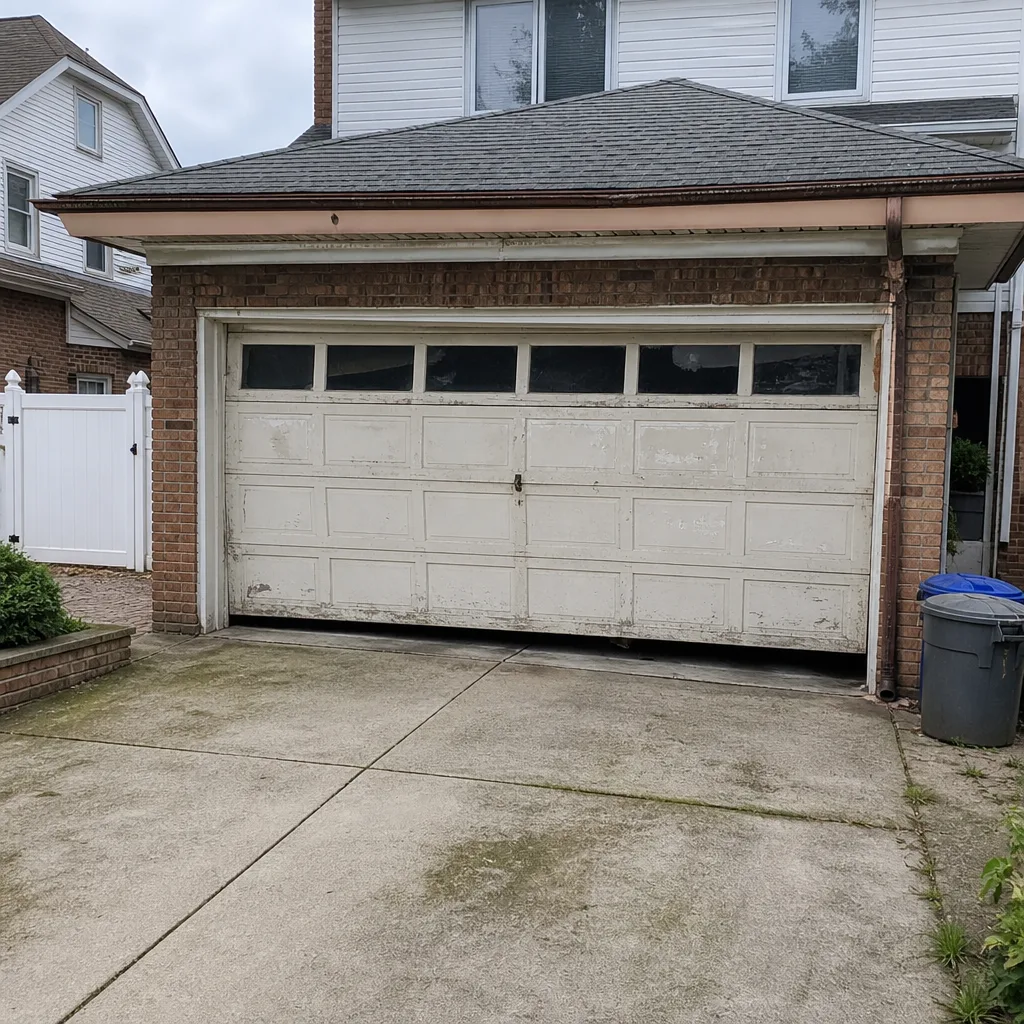 Before
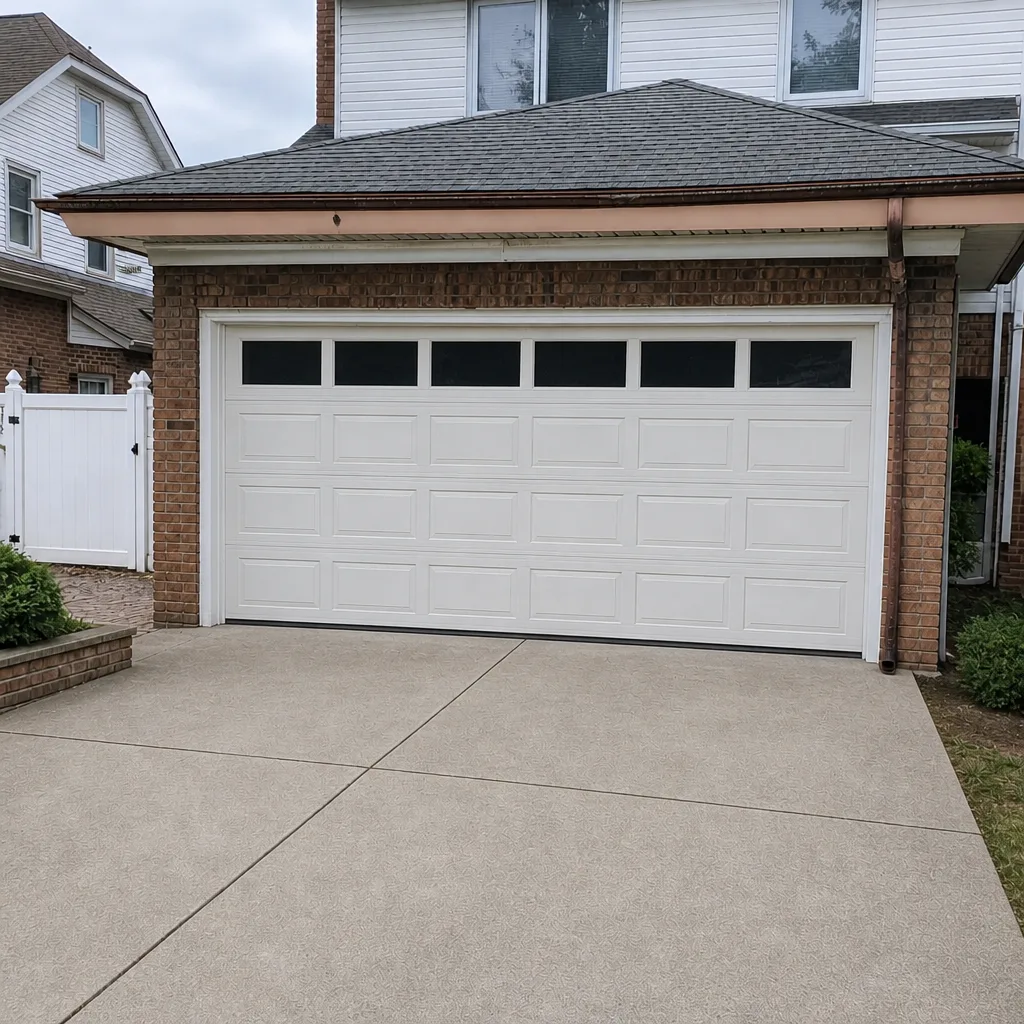 After
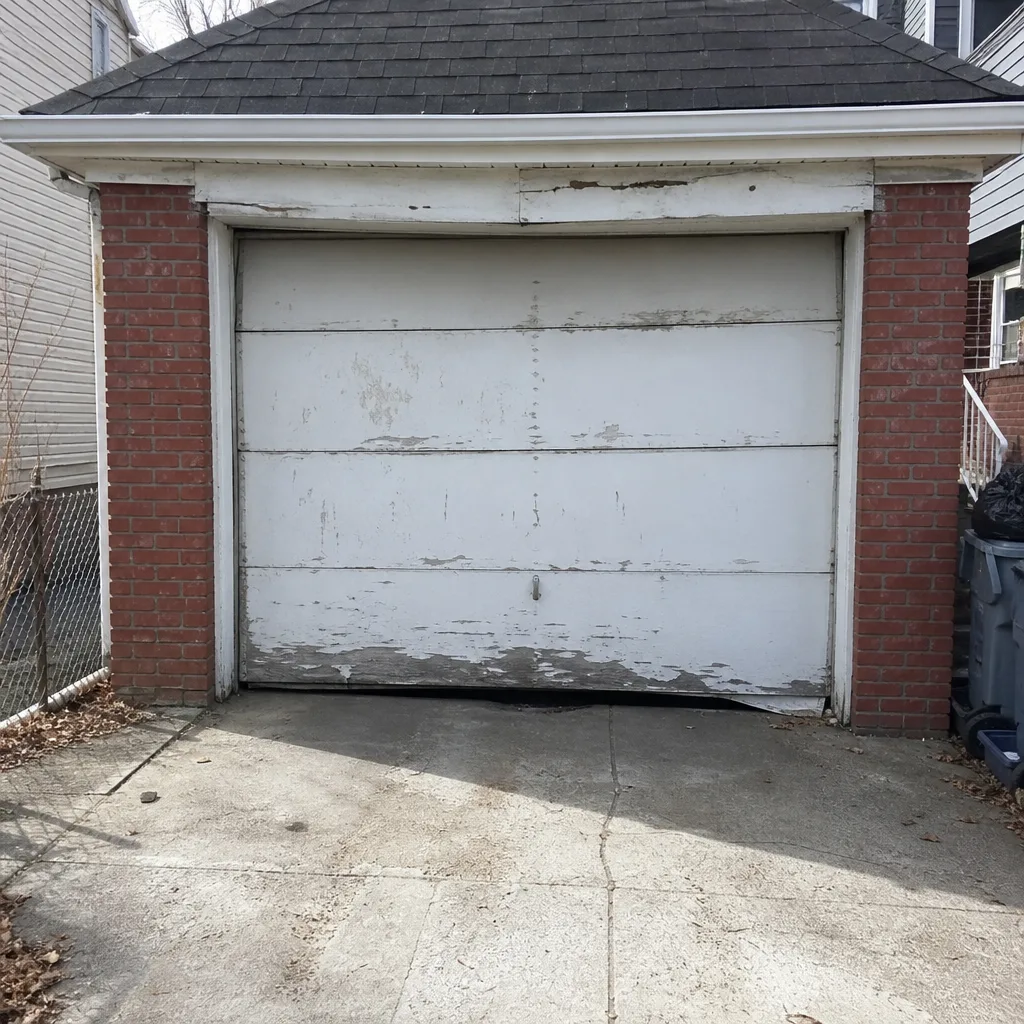 Before
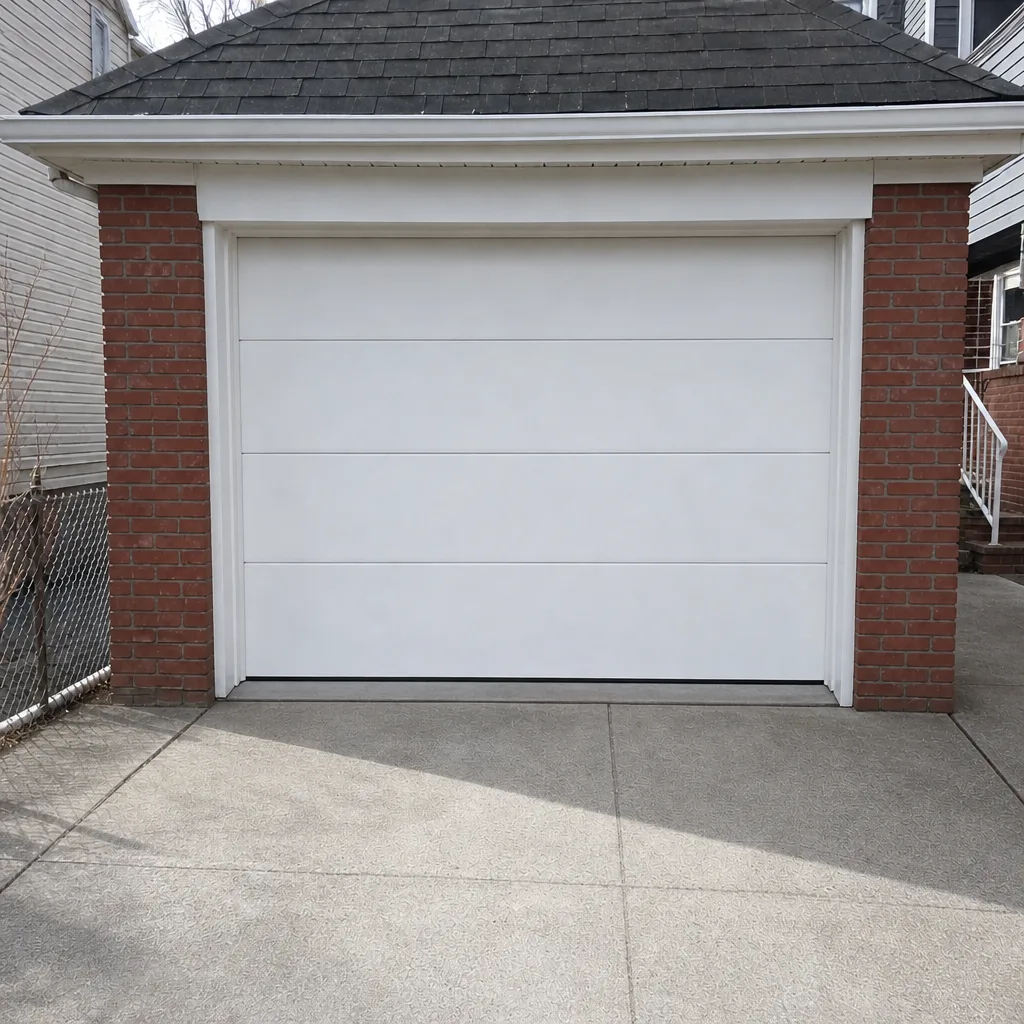 After
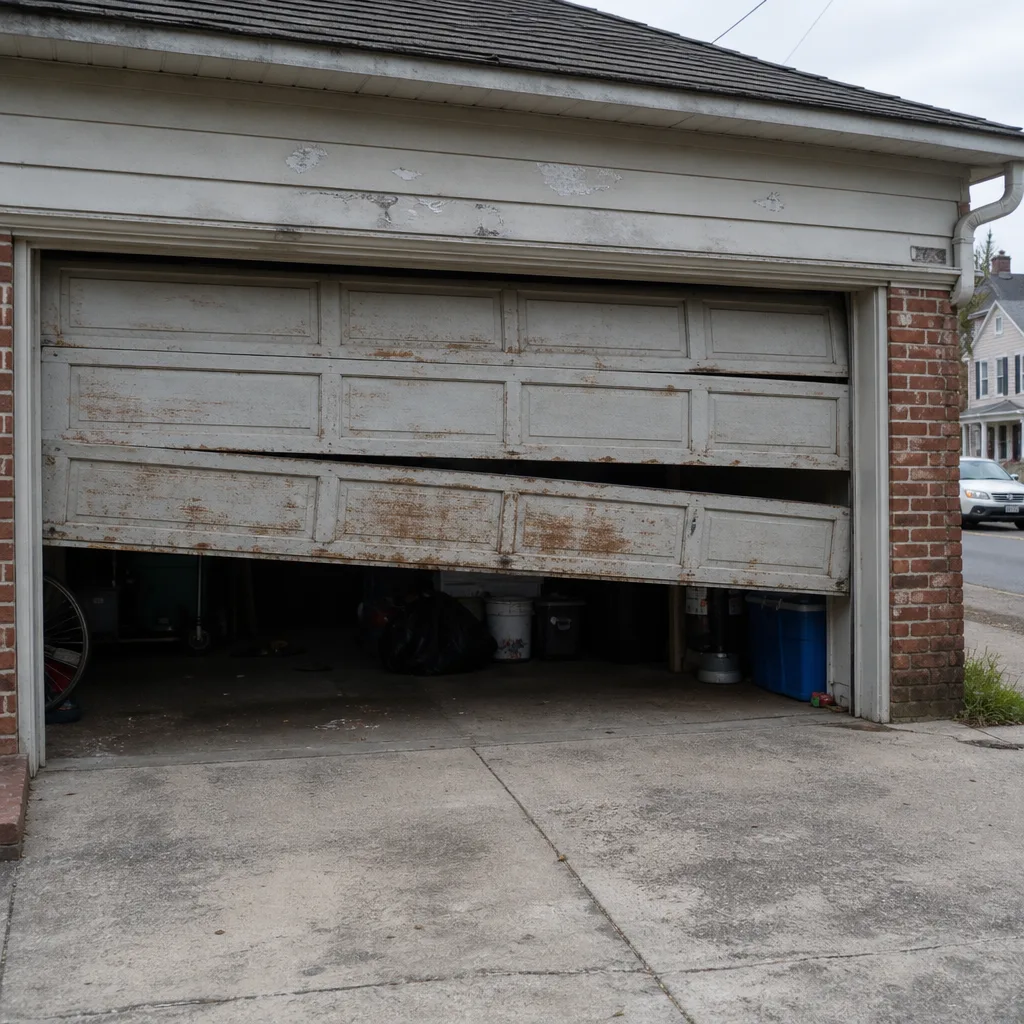 Before
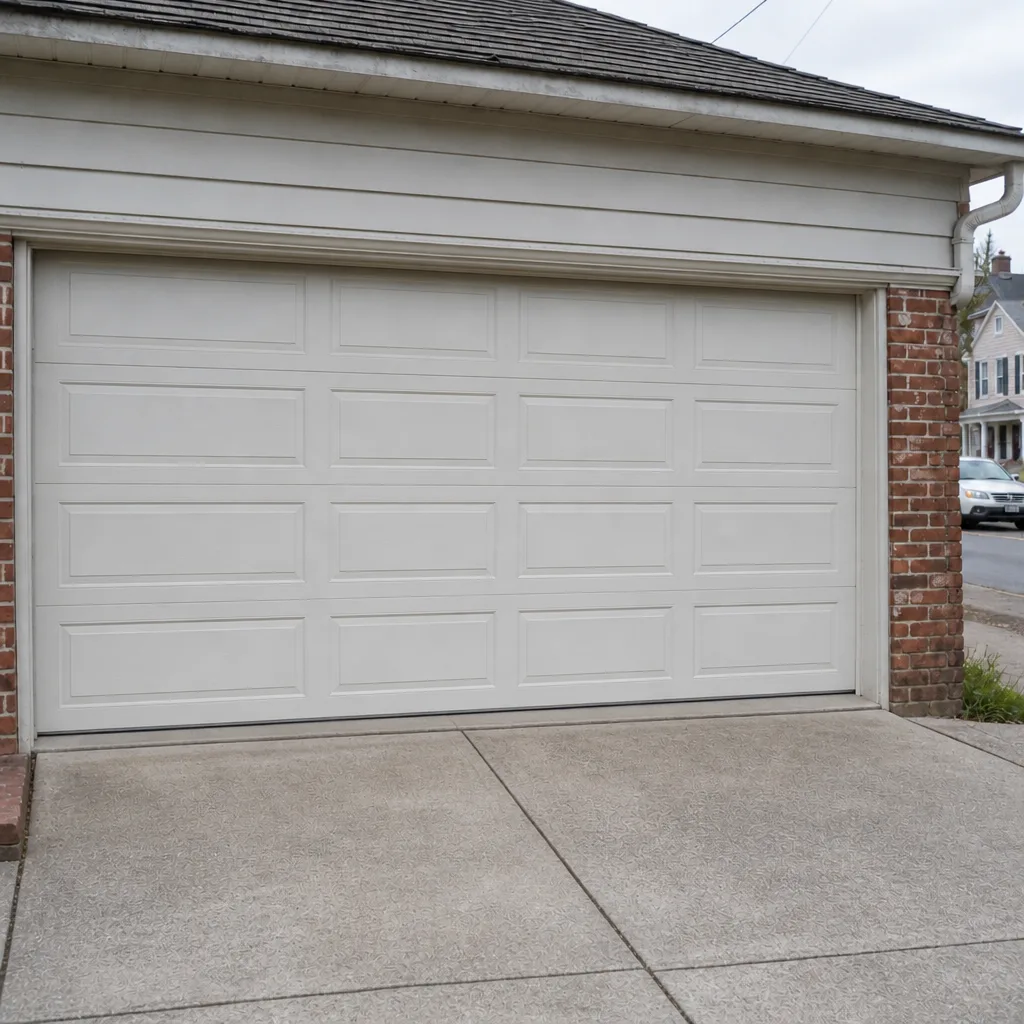 After
Common Mistakes to Avoid
- Never try to fix a broken spring yourself. Springs under tension are the highest-risk part of the door, and the wrong move can cause serious injury. This is the one repair we insist homeowners leave to a trained technician.
- Disengaging the opener while the door is in the air. Pulling the release with the door open can let it drop. Release only with the door fully closed, and support it as it comes down.
- Propping a stuck-open door with whatever’s handy. A door braced against wind can swing or slam if the brace slips. Use something flat and secure across the bottom, not a loose ladder or a chair.
- Forcing a door that won’t move by hand. If it won’t lift or lower with light effort, something is broken. Forcing it can bend panels or injure you. Stop and call.
- Skipping the pre-storm release test. A manual release that worked last year can seize or stick. Test it before each season, not during the storm.
- Assuming the power is the problem. A door that won’t close during a storm is often an alignment or sensor issue, not a dead opener. If you’re unsure, have a professional diagnose it. Our garage door opener repair work covers Genie, Craftsman, Chamberlain and LiftMaster systems so the diagnosis isn’t guesswork.
- Waiting too long on storm damage. Small track misalignment or a torn seal becomes a bigger repair after the next storm. Inspect within 48 hours and get it handled now.
When to Call a Professional
Call a professional for anything involving springs, cables, or electrics – and don’t wait if a storm is coming. Specific situations that warrant a call to Garage Door Repair Sheepshead Bay: a door that won’t close or won’t open; a spring that’s snapped or a cable that’s off its drum; a track pulled from the wall by storm damage; an opener that runs but won’t move the door, or a Wi-Fi opener that’s lost control; and any damage you’re unsure about after the 48-hour inspection. Garage Door Repair Sheepshead Bay offers free estimates in Sheepshead Bay – call (833) 954-3381. Our technicians have up to 13 years of experience, we work on the brands you’ll actually find here, and we set the price in writing and agree to it before any work starts.
Frequently Asked Questions
You can safely close a stuck door by hand if the manual release works and a spring hasn’t failed – disengage the opener, lower the door slowly, brace it, and seal the threshold. Don’t attempt to repair a broken spring, cable or track yourself; those need a trained technician. If you’re unsure, call for emergency service and we’ll get the opening secured as fast as it’s safe to do so.
Disengage the opener with the door closed if possible, check for a track obstruction or misaligned safety sensor, then lower the door by hand if a spring failure isn’t the cause. Once it’s down, brace the interior at the bottom and lay a temporary seal along the threshold. Call (833) 954-3381 – emergency garage door service exists for exactly this security and water risk.
Pull the red manual release with the door fully closed, lift the door slowly by hand using the handle or lower panel, and re-engage the trolley when power returns by cycling the opener. Don’t let the door free-fall and don’t force it if a spring has failed. Check that your opener has a charged standby battery before the season.
Storm damage to a garage door is often covered, but coverage depends on your policy’s terms and the type of event, so check with your insurer. Document the damage thoroughly first – wide shots, close-ups, opener label, interior water – and get a written repair estimate. We can work with your insurer and always quote the price before any work starts.
We service LiftMaster, Chamberlain, Genie, Clopay, Amarr, Wayne Dalton, Craftsman and Raynor equipment – which covers the vast majority of doors and openers in Sheepshead Bay homes. If you’re not sure what you have, read the label on the opener head or the door panel and tell us when you call.
Cost depends on what failed and what parts are needed, which is why we give a written estimate before any work begins. Spring repair, opener repair and track repair are each priced separately, and the written quote is the price. Call (833) 954-3381 for an exact estimate – the initial estimate is free.
The Bottom Line
Garage door emergencies in Sheepshead Bay are mostly preventable with a short session of preparation. Test the manual release each season, know how to run the door by hand, keep a temporary brace and threshold seal ready, photograph the door before storm season, and inspect five specific components within 48 hours after any storm. Keep the door closable and avoid the high-risk repairs – springs, cables, tracks and electrics – for a trained technician. That one afternoon to prep means a storm is something you manage, not something that manages you. If you’d rather have a professional look at your door before the next storm, phone (833) 954-3381 to set up a free estimate.
Whether you need an urgent fix or a plan for the next storm, our team covers the full range. If you want to talk through your options before an emergency develops, start with Garage Door Repair Sheepshead Bay, or call garage door repair directly when something is down. For a door that’s at the end of its life rather than failing, explore garage door installation – we’ll measure properly and give you a written price before anything is ordered. Call (833) 954-3381 for a free estimate and we’ll help you plan it.
Written by the team at Garage Door Repair Sheepshead Bay.